
How Long It Took My Body to Adjust to Mold Binders (and What I Watched For)
I remember searching for timelines more than once. I wanted reassurance that what I was feeling was temporary — that if I just stayed the course long enough, my body would adapt.
What I found instead were vague answers.
“Everyone’s different.” “Give it time.” “Push through the adjustment phase.”
None of that helped me understand what was actually happening in my own body.
What finally helped was shifting away from timelines entirely.
The Phase Where I Was Watching the Clock
Early on, I treated adjustment like a countdown.
If I felt worse, I told myself it was temporary — something to endure until my body caught up.
But the days didn’t resolve cleanly.
Symptoms stacked instead of passing.
I wasn’t adjusting. I was accumulating strain.
That realization forced me to rethink what “adjustment” actually meant.
Why Timelines Can Be Misleading
Adjustment is often framed as something the body does automatically.
But adjustment depends on capacity, not compliance.
A body that’s already overwhelmed doesn’t adapt just because time passes.
It adapts when the load becomes manageable.
Time alone doesn’t create tolerance. Safety does.
Once I understood that, the pressure to “wait it out” began to fade.
What Adjustment Actually Looked Like for Me
Adjustment wasn’t a sudden shift.
It showed up in subtle ways.
I noticed that symptoms didn’t linger as long. My body returned to baseline more easily. The space between reactions widened.
Stability came before comfort.
Those were the signs I learned to trust.
The Signals I Paid Attention To Instead of the Calendar
I stopped asking how long it had been.
I started asking how my body behaved between doses.
Could I sleep more deeply? Did my nervous system feel steadier? Was daily life slightly easier to tolerate?
Adjustment felt like recovery between exposures, not endurance through them.
That shift helped me stop guessing.
How This Connects to Feeling Worse on Binders
This perspective clarified why binders sometimes made me feel worse.
When adjustment wasn’t happening, symptoms didn’t resolve — they compounded.
I wrote about that confusion in What to Do If Mold Binders Make You Feel Worse and about early intolerance in Why Some People Can’t Tolerate Mold Binders at First.
Seeing those patterns together helped me respond with clarity instead of fear.
Where Adjustment Fits in My Recovery Framework
Binders didn’t become easier because I waited long enough.
They became easier because my system felt more supported.
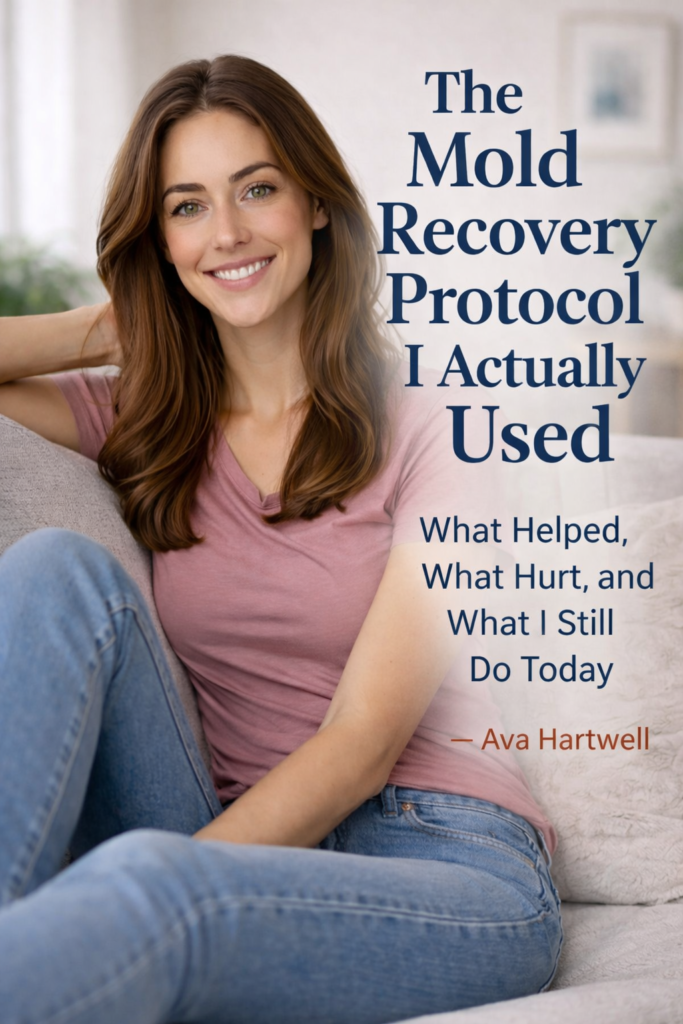
This idea — that readiness creates tolerance — is woven throughout The Mold Recovery Protocol I Actually Used (and What I Still Do Today).
This article exists to replace timelines with trust.
A More Honest Way to Measure “Adjustment”
If you’re waiting for a clear moment where binders suddenly feel easy, you may be waiting for the wrong thing.
What mattered more for me was whether my body felt safer over time.
Adjustment isn’t about how long you last. It’s about how well you recover.
Once I stopped chasing timelines, my body finally had room to adjust.