
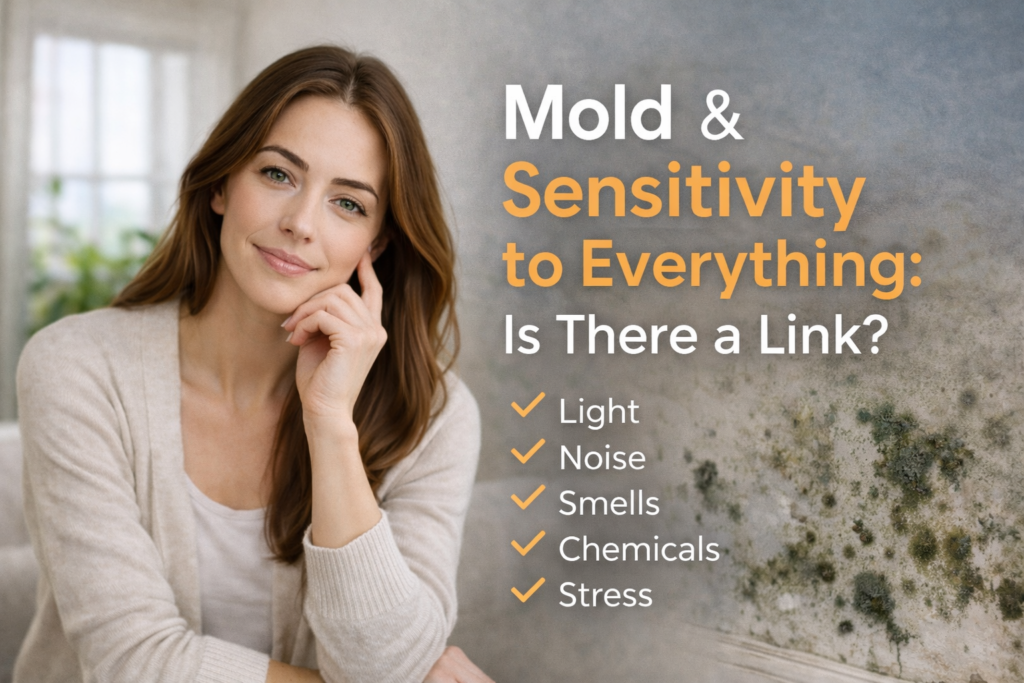
Why Mold Exposure Can Make You Sensitive to Everything (And What That Actually Means)
By Ava Hartwell
TL;DR: Many people notice heightened sensitivity to light, sound, smells, chemicals, temperature, or stress after mold exposure. This doesn’t mean everything suddenly became “toxic.” It often reflects a nervous system and immune system that have been pushed into a heightened state of reactivity. This article explains why that happens, what science supports, what remains unclear, and how to think about it without fear.
Who This Article Is For
This article is for people who:
- Feel more sensitive to the world after mold exposure
- Notice reactions to smells, noise, light, chemicals, or stress
- Wonder if they’re imagining it — or if something changed
- Want explanation, not panic
If you’re looking for a single villain or a quick fix, this won’t be that. If you want understanding and clarity, you’re in the right place.
One of the most common things I hear from people after mold exposure is this:
“I feel sensitive to everything now.”
Lights feel brighter. Sounds feel sharper. Smells feel overwhelming. Stress hits harder. Even environments that never bothered you before suddenly feel like too much.
This experience is real — and it’s far more common than people realize.
But it’s also widely misunderstood.
This article explains why mold exposure can leave people feeling overstimulated and reactive, what science helps us understand about it, and where uncertainty still exists.
Table of Contents
- What People Commonly Experience After Mold
- Why This Doesn’t Mean Everything Is Toxic
- The Nervous System Connection
- Immune and Inflammatory Factors
- Why Stress Feels So Much Worse
- Where I Personally Land
- What This Is Not
- Frequently Asked Questions
- The Bottom Line
What People Commonly Experience After Mold
After mold exposure, many people report increased sensitivity to:
- Smells (cleaners, perfumes, smoke, “chemical” odors)
- Light (screens, fluorescent lighting, sunlight)
- Sound (background noise, sudden sounds)
- Temperature changes
- Stress and emotional overwhelm
- Caffeine, alcohol, or medications
For some, these sensitivities come on suddenly. For others, they build gradually.
What’s confusing is that medical tests often don’t clearly explain why this is happening.
Why This Doesn’t Mean Everything Is Toxic
One of the biggest misconceptions is that increased sensitivity means the world suddenly became more dangerous.
That interpretation can be deeply unsettling — and often unnecessary.
In many cases, what’s changed isn’t the environment. It’s how the body is responding to it.
After a significant biological stressor like mold exposure, the body can shift into a state of heightened vigilance. Systems designed to protect you become more reactive.
This doesn’t mean your symptoms are “in your head.” It means your body is trying — sometimes clumsily — to keep you safe.
The Nervous System Connection
The nervous system plays a central role in how we experience the world.
Chronic mold exposure can act as a sustained stressor, pushing the nervous system toward a state of hyperarousal. In this state:
- Sensory input is amplified
- Threat detection is heightened
- Recovery from stress takes longer
From a biological standpoint, this makes sense. The body is prioritizing survival.
Unfortunately, that same survival response can make everyday experiences feel overwhelming.
Immune and Inflammatory Factors
Mold exposure can also interact with the immune system and inflammatory pathways.
When the body is dealing with ongoing immune activation, it may become less tolerant of additional stimuli. This can contribute to:
- Lower thresholds for discomfort
- Increased fatigue
- Difficulty filtering sensory input
This doesn’t require extreme toxin levels to be impactful — especially in people who are already depleted.
Why Stress Feels So Much Worse
Many people notice that stress becomes a major trigger after mold exposure.
This isn’t weakness. It’s physiology.
When the nervous and immune systems are already taxed, additional stress can push the system past its coping capacity more quickly.
This is why emotional stress, physical exertion, or mental overload can suddenly feel intolerable.
Where I Personally Land
I don’t believe mold exposure turns people into fragile beings who need to avoid the world forever.
I also don’t believe people are imagining these changes.
In my experience, mold exposure often disrupts the body’s ability to regulate stress and sensory input. Recovery isn’t about avoiding everything — it’s about restoring resilience.
That distinction matters.
What This Is Not
This pattern of sensitivity is not:
- A personal failure
- A sign that you’re “too sensitive”
- Proof that everything around you is toxic
- A permanent state for everyone
Understanding what’s happening can be grounding — and often relieving.
Frequently Asked Questions
Is this the same as chemical sensitivity?
It can overlap, but not everyone fits into a formal diagnosis. Many people experience temporary or partial sensitivity during recovery.
Why didn’t I have this before mold exposure?
Mold can act as a tipping point, pushing stressed systems past their adaptive capacity.
Does this mean I should avoid everything?
No. Avoidance can sometimes reinforce sensitivity rather than resolve it.
Will this last forever?
For many people, sensitivity improves as the body stabilizes and recovers.
Is this related to EMFs?
EMFs may be one of many stressors that feel more noticeable when the nervous system is dysregulated — not necessarily the cause.
The Bottom Line
Mold exposure can change how the body processes stress and sensory input.
That doesn’t mean the world suddenly became unsafe.
It means your system may need time, stability, and support to regain balance.
If you’re experiencing this, you’re not broken — and you’re not alone. IndoorAirInsight exists to help make sense of experiences that too often go unexplained.
Pingback: The Top 12 Foods With Higher Mold Burden (And What to Choose Instead During Recovery) - IndoorAirInsight.com