
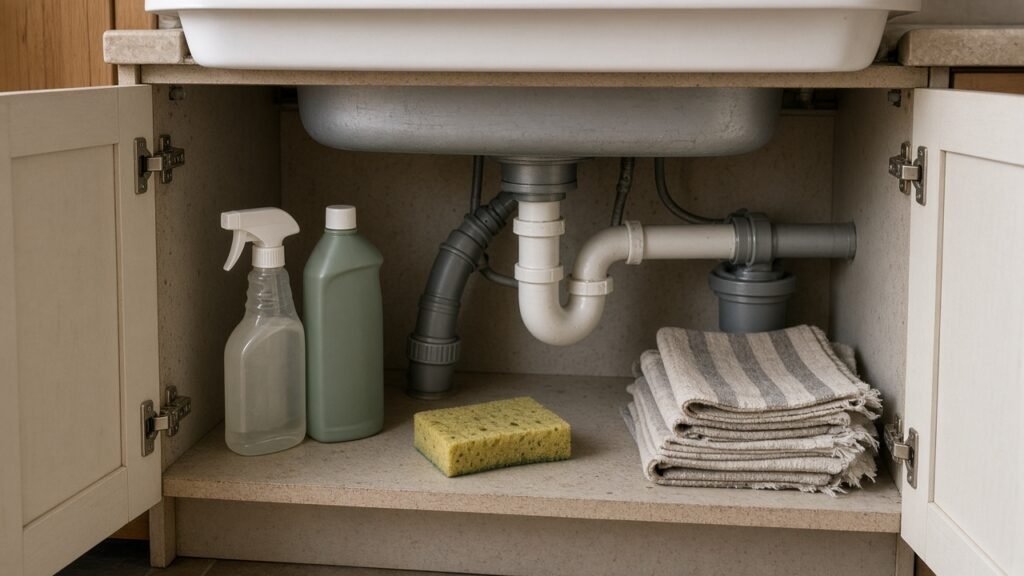
I opened the cabinet under the sink after a busy week and the air came out first. The doors always stuck a little at the top. Then that cooler pocket moved into the kitchen like it had been waiting. A sponge sat in the back corner, still soft, never fully dry. Extra dish towels were folded on the particleboard floor. They smelled sweet-stale when I lifted them. The pipes were quiet. The cabinet was not.
We treat that dark box as storage. Not a room. Door usually shut. Cleaning spray bottles living in damp air. A slow drip history nobody wanted to admit. I used to close it and keep moving. The kitchen looked fine. The cabinet kept its own weather.
The box we call storage
The floor of the cabinet was cool particleboard. It never felt like the rest of the kitchen. Hands reached in for a trash bag or a spare sponge and came back out. The door shut. Whatever lived in there stayed in there. I did not think of it as indoor air. I thought of it as under the sink.
Soft belongings sat in still damp air. Towels that had been used and almost dried. A second sponge that never made it to the counter. The bottles of cleaner that we keep because they might be useful later. All of it lived closer to the plumbing than to the light. Kitchen air moved when someone cooked or opened a window. Cabinet air did not. It waited.
I learned this the same way I learned other closed spaces in the house. The closet that never quite cleared. The laundry room that never felt dry. Places we treat as utility and then forget they hold weather too. The cabinet under the sink was smaller. That made it easier to ignore.
A drip history nobody named
There had been a drip. Not a dramatic one. The kind that leaves a darker oval on particleboard and then dries enough that you tell yourself it is old. I wiped it. I put a towel down. I closed the door. Progress felt like the wet spot was gone. The history stayed in the air.
Cleaning spray lived in that same air. The bottles sat on a damp floor and their labels softened at the edges. I would pull one out, use it on the counter, put it back. The cabinet took the bottle and the leftover moisture and kept both. I did not stand there long enough to notice the difference between the kitchen and the box under it.
Some rooms keep their own climate even when the rest of the place seems ordinary. I have written about the guest room we kept closed and the bathroom fan we shut off too soon. The under-sink cabinet was the smallest version of the same thing. Door shut. Air still. Soft things sitting in it.
Kitchen air and cabinet air
Kitchen air has movement. Dishes, steam, the refrigerator cycling, someone walking through. Cabinet air is the opposite. It is the air that has nowhere to go. When I opened the doors after days of not looking, I caught it. Cooler. A little sweet. The sponge that never finished drying. The towels that had taken on the smell of the space instead of leaving their own.
I used to think indoor air quality was about the rooms we stand in. The living room. The bedroom. The kitchen when we are at the sink. The cabinet taught me the house keeps weather in the places we call just cabinets. Moisture does not need a whole room. It only needs a closed box, a little history of drip, and belongings that stay soft.
That is part of why some things keep coming back after you clean them. You wipe the visible spot. You replace the sponge. You close the door again. The air that had been waiting is still the air that lives there.
What cleaning did not finish
I cleaned. The particleboard looked better. The bottles got wiped. A dry towel went down for a few days. It felt like progress. It did not finish a wet history. The cabinet still held cooler air than the kitchen. The next sponge still sat a little too long. The doors still stuck at the top when I opened them after a week of not thinking about it.
I am not talking about a protocol. I am talking about the moment the doors open and the air that comes out is not the air you have been breathing at the counter. Hidden moisture does not always announce itself behind walls first. Sometimes it lives in the box we treat as storage. Sometimes the first sign is a towel that smells sweet-stale and a sponge that never fully dried.
The difference between kitchen air and cabinet air is small until you notice it. Then it is hard to un-notice. I still reach under the sink. I still close the doors. I try to leave them open longer now. I try not to store the soft things in the stillest air. Start here if you are trying to see the pattern across the whole place instead of one cabinet at a time. The longer thread on mold and moisture and cleaning and remediation sits with the same rooms-first habit. How these essays are written is on the editorial standards page.
The cabinet was never the whole house. It was the smallest room that still kept weather.