
The Types of Mold I Found in My Home — Their Effects, Causes, and the Risks You Should Know
By Ava Hartwell
Before my own home disaster, I thought mold was mold. One monster. One name. One threat. What I didn’t realize — until I was sick, my kids were struggling, and pieces of our house were being pulled apart — is that there are many types of mold found indoors, and each one carries its own story, its own behavior, and its own risks.
If you’re staring at a suspicious patch, or you’ve recently learned your home has mold, I want to walk you through the types I had to learn about the hard way — not from a textbook, but from inside my own walls.
Why Different Molds Matter More Than You Think
According to the CDC, the color or species of mold doesn’t automatically determine how dangerous it is (CDC Mold Overview). Instead, the real questions are:
- Why is it growing?
- What moisture problem created it?
- How much of the home is affected?
- How are you or your children reacting to it?
But knowing the common indoor mold types helped me understand what my home was trying to tell me.
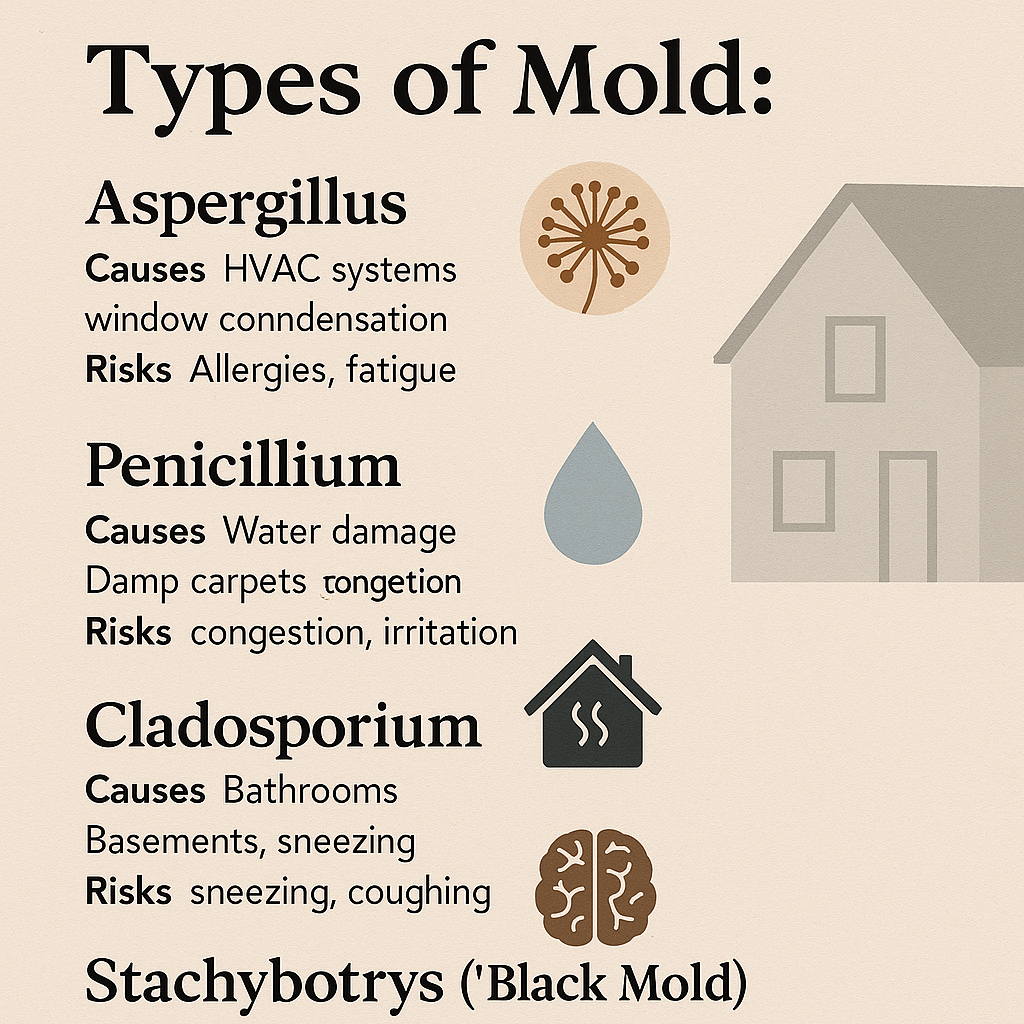
1. Aspergillus — The One That Shows Up Everywhere
Aspergillus was one of the molds we later discovered in our home, especially around dusty corners and HVAC areas. It grows fast and spreads easily indoors.
Common Sources:
- HVAC systems
- Window condensation
- Dusty areas with moisture
Potential Effects:
- Sinus issues
- Worsening allergies
- Fatigue and brain fog
- More serious infections in people with weakened immune systems
It was one of the contributors to the brain symptoms I wrote about here: What Mold Does to Your Brain: The Symptoms I Lived Through and the Proof .
2. Penicillium — The One That Spreads Quickly
Penicillium is infamous for spreading fast after water damage. It’s often blue or green and appears fuzzy — but don’t let the color fool you. This mold can move through porous materials shockingly fast.
Common Causes:
- Past leaks
- Wet drywall
- Damp carpets or padding
- Basements and crawlspaces
Potential Risks:
- Respiratory irritation
- Skin responses
- Persistent congestion
- Exacerbated asthma symptoms
In my home, this was one of the molds hiding behind a wall where water damage had gone unnoticed for months.
3. Cladosporium — The One You Might Mistake for Dirt
Cladosporium often looks like harmless black or dark brown “dust.” It fooled me more than once — especially around windowsills.
Common Locations:
- Bathrooms
- Basements
- Window frames
- HVAC ducts
Potential Health Effects:
- Worsening allergies
- Sneezing, coughing
- Red or irritated eyes
Cladosporium was one of the molds that taught me the difference between “just dust” and a real problem. I break down that lesson here: Is It Mold or Just Dust?
4. Stachybotrys (“Black Mold”) — The One With the Scary Reputation
Stachybotrys chartarum is what people think of when they hear “black mold.” It grows on wet, cellulose-rich materials like drywall and insulation that remain damp for long periods.
Causes:
- Long-term water intrusion
- Hidden leaks
- Chronic moisture issues
Risks:
- Respiratory symptoms
- Headaches
- Cognitive changes
- Worsened symptoms in children
While I don’t focus on fear-based language, I will say this: Any mold growing behind a wall for months can be serious — regardless of species.
The Most Important Lesson: Mold Type Matters Less Than Mold Cause
The EPA notes that any mold indoors indicates a moisture problem (EPA Mold Resource).
Meaning:
The species isn’t the warning — the moisture is.
Once I understood this, everything changed. Mold wasn’t my enemy. Water was the messenger.
Why This Matters for Your Health
Mold exposure affected my brain, my body, and my children in ways I never expected. I wrote about their symptoms — and the developmental changes I watched — here: What Mold Did to My Kids .
Whether it’s Aspergillus, Penicillium, or something more dramatic, the effects can be cumulative, subtle, and deeply personal — especially for kids or anyone with a sensitive system.
What to Do If You’ve Found Mold
If you’ve identified a type of mold or think you might be dealing with moisture, the next step is about cleaning safely — without spreading it or making symptoms worse.
I created a full guide here: How to Clean Mold the Right Way (And the Wrong Ways That Made Me Sicker)
And if you’re wondering whether you can stay in the home during all this, you can read my breakdown here: Can I Live in a House With Mold?
With you in this,
Ava
If you’re new here and want to understand how my own journey through mold exposure and environmental illness began, you can read more about it on my About page: here.
Pingback: Are There Specific Symptoms for Specific Molds? The Truth Behind “Symptom Matching” - IndoorAirInsight.com