
What Mold Did to My Kids: Behavioral and Developmental Changes To Never Again
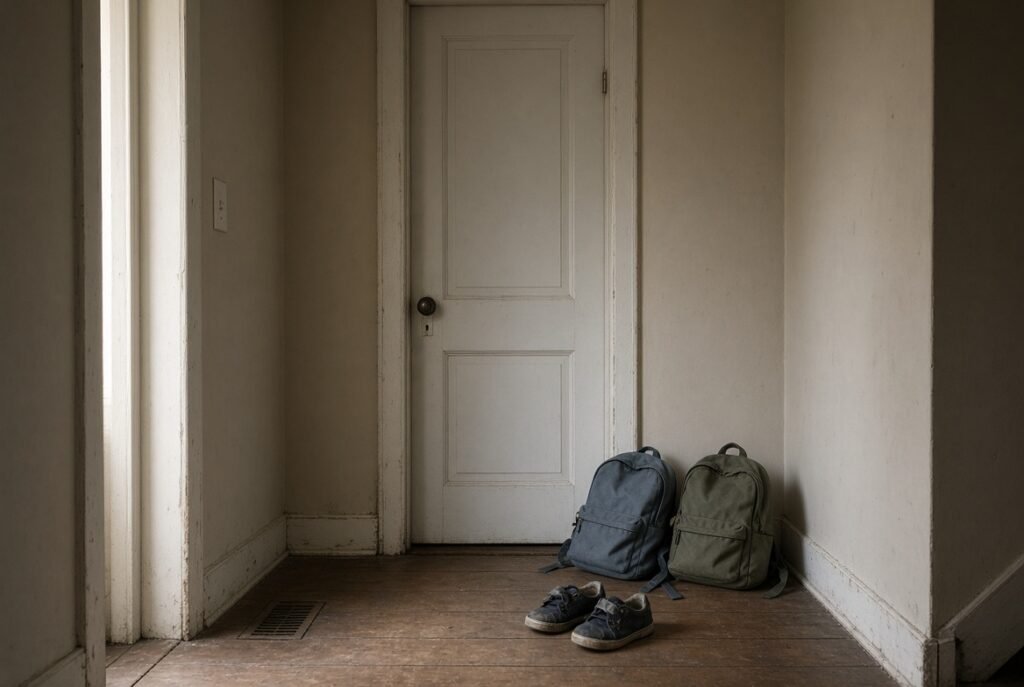
The closed bedroom at the end of the hall is where I first stopped recognizing the mornings. Not a crisis that would have photographed well. Shoes that took too long. A voice that had less play in it. A child who used to come into the kitchen already mid-sentence and who now arrived as if the day had started without her.
There are two of them. They did not match each other, which made it easier for me to argue. One went quiet. One went sharp. Both slept as if sleep were work. I am a mother in a house that looked finished. I am not a pediatrician. Anything that sounds like development, learning, or a behavior you cannot shake belongs with a clinician who can actually look at a child. This page is what I saw in this building, and what changed when we left it.
Mornings that did not belong to the children I knew
In the last house, mornings had a noise I trusted. Here, the hallway stayed dim longer. The child who slept in the room I had started shutting woke sticky-eyed and already tired. The other one woke ready to fight the socks. I kept translating it into parenting: too much screen, not enough air, I was inconsistent, they were growing.
The room had a smell that was not every room. Sweet-stale after the system had been running. A windowsill that would not wipe like the dresser. A strip of carpet under the glass that stayed cooler than the middle of the floor. I noticed the children and the sill on the same days and filed them in different drawers so I would not have to connect a school morning to a leak I had called finished.
Teachers did not get the version of them I got on a Saturday away from the house. That gap sat in me like a secret I was afraid to say out loud because it sounded like I was blaming paint.
They were not the same people in the driveway
The first honest data I trusted was the car. Two miles from the house, voices came back. Shoulders dropped. The sharp one got funny again. The quiet one found a sentence that had a run in it. I have written that pattern for myself under feeling worse at home and better the moment we left. Watching it happen in them was worse, because I could not tell them to stop inventing it.
Hotels were crude experiments I did not want. Different beds. Different noise. Also: easier mornings. I wanted that to be vacation magic. It kept lining up with leaving the hallway, not with ice cream. When we came back, the closed door and the old sleep came back with us. I stood in that doorway and felt my own chest do the same tightening it did on ordinary Tuesdays.
I do not need a mechanism to say that. I need a memory of a minivan and a memory of a sill.
School held a version I kept missing at 7 a.m.
Notes came home that did not match the child I remembered from the year before. Not a diagnosis. Attention that slipped. Patience that ran out earlier. A body that wanted to leave the classroom the way I wanted to leave the hallway. I made the appointments I was supposed to make. That was correct. A website is not a stand-in for that room.
What I will not do is take those notes and hang them on a species or on a word I learned on a forum. I tried matching names on a printout to moods in the kitchen and it was a dead end. The types I found in this home still matter as a record of wet places. They do not get to author a child.
If something in a kid looks like a developmental or behavioral concern that is lasting, changing, or scaring you, that belongs with a pediatrician or another clinician. I will say it twice so this title cannot be used as a shortcut. I lived the fear of the shortcut. It made me late to both the doctor and the wall.
The house I kept calling fine while they changed
The leak had been quiet. A stain that dried. Paint that still looked like a decision. I walked past the cool baseboard and called the gray on the sill dust. I have a whole page for mold and moisture because that is what the building was doing while I was writing better reward charts.
I bought tests because I wanted ink that would make me sound less like a mother with a theory. An air cassette came back tidy. A later envelope did not explain their faces. I already told the first half of that in the test that didn’t settle it. The testing door is there for the hunger. It does not parent. It does not sit through bedtime in a room that has its own weather.
The quieter pieces in me — fog, irritability, the sense that I was failing at a house — I keep under health and exposure and under signs I did not connect to the home. I mention them only to say the children were not a separate movie. We were in the same hallway. They just had less language for leaving.
What I will not claim about their brains
I will not write that a wall shaped how they are growing. I will not write a toxin as the plot of their year. How I write here is on the editorial standards page so a title with the word developmental cannot drag me into a sentence I cannot stand in. I saw sleep, mood, mornings, and a difference by location. A clinician can decide what those things are. A damp cavity can be true at the same time.
The CDC treats indoor dampness and mold as a reason to deal with the building. That is the public-health sentence I will put next to this hallway. Fix water. Take a child to the person who treats children. Do not make one of those jobs do the other.
Never again, for me, means the door and the wall
Never again, in this house, means I do not talk myself out of a bedroom that wants to stay shut. I do not call a stained sill a housekeeping problem for a season while I wait for a child to snap back. I do not use a tidy lab range as permission to ignore a morning that does not sound like my kid.
It does not mean I get to narrate their future. They have their own clinicians. They have days that are just days. They also had a hallway with a climate, and they were easier in the car, and I will not pretend I did not see that.
If you are earlier than I was, look at the room and call the pediatrician when a child scares you or slips in ways you cannot hold. Then look at water. Start Here is the map of this site. The children were never a chart. They were two people in a building that still looked fine, and the building was not done talking.
Pingback: Can Mold Cause Seizures or Seizure-Like Episodes? What I Learned When Symptoms Escalated - IndoorAirInsight.com
Pingback: Types of Mold I Found in My Home — Their Effects, Causes, and the Risks - IndoorAirInsight.com
Pingback: Is Mold Causing My Anxiety or Depression? The Connection I Didn’t Understand at First - IndoorAirInsight.com
Pingback: Can Mold Cause Rage, Irritability, or Emotional Outbursts? What I Didn’t Recognize at First - IndoorAirInsight.com
Pingback: Can Mold Cause Connective Tissue Problems? Why My Joints Felt Unstable and Weak - IndoorAirInsight.com
Pingback: Can I Live in a House With Mold? - IndoorAirInsight.com