
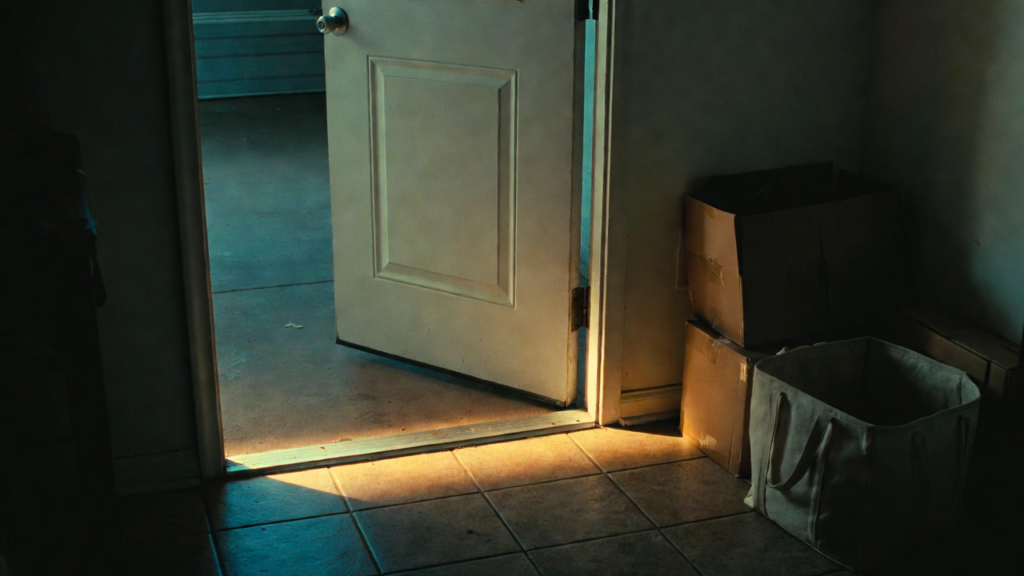
The kitchen door hit the weatherstrip and dropped. Tile, then a thin metal edge, then concrete two inches lower. My arms were full. Grocery bags cutting into my fingers. A backpack sliding off one shoulder. I pushed the door with my hip and left it open because closing it would have meant putting something down.
The first air was cooler than the kitchen. Older, too. Not sharp. Damp cardboard and older rubber after a warm day that had followed rain. I used to name that smell garage and keep walking. I thought I had left the house. I had only changed floors.
The garage had a ceiling. It shared a wall with the kitchen. It held still air most of the week and then, in one open door, offered that air to the rooms with rugs. I called it outside so I would not have to count it with the rest of the house. Keys on a hook. Shoes allowed to stay dirty. Recycling that could wait. Cardboard stacked against the shared wall because the mudroom was already full. Soft totes with last season in them, parked where the slab stayed cool and the car, when it came home, left a short heat with nowhere honest to go.
A porch lets weather pass through. This room kept last Tuesday.
The door I opened with both hands occupied
That threshold was the part I used every day and thought about the least. The drop in the floor told my body something before I had language. Cooler. Flatter. A pause I stepped over while already thinking about the counter. The living rooms had one weather. The garage had another. The strip between them was not a wall. It was a connection I kept skipping.
I stood in that opening more times than I can count and told myself I was imagining the difference. Confusion is allowed here. I was tired. The bags were heavy. The kids were already in the next room. The smell was quiet enough to argue with. Quiet is how a garage gets into a living floor. I write these rooms down so someone else can recognize a door earlier than I did, which is why I keep a door at Start Here when the house starts talking in small weathers instead of stains.
House air does not stop at a strip you can catch with your heel. Every time that kitchen door stood open with an armful of bags, the two rooms shared a minute. Sometimes longer. The minute was ordinary. That is why I missed it.
What sat by the door because concrete felt unfinished
The things I would not have left on a bedroom floor looked harmless on the slab. A box that had already been rained on once in the driveway. A tote that never quite dried after a beach bag lived in it. A moving blanket folded against the wall nearest the kitchen. Paper and fabric in the stillest corner, closest to the door I opened without thinking.
Soft belongings by that door are not extra storage. They hold what the room is doing and then they stand in the path of the first breath the kitchen takes. I did not have a system. I had a habit. The habit was to treat the drop in the floor as the end of the house. The house does not end there. What we carry through a threshold can bring a room with it, which is the quieter version of what I later wrote about backpacks, bags, and shoes after we left a house that still looked fine.
Cardboard drinks whatever the night leaves on concrete. Fabric keeps a cooler edge longer than tile does. I am not turning those objects into a verdict. I am keeping the picture I lived: paper and cloth sitting where seasonal damp, still air, and a short wash of car heat could meet without a window to finish the job. The totes did not look wet. The boxes did not look like a story. They sat where I would smell them first.
The smell that was not a sentence
On those warm days after rain, the air that came through the open kitchen door was not kitchen air. It was flatter. A little sweet in the cardboard way. A little used in the rubber way. Nothing I would have photographed. Nothing I could have pointed to later at the sink and made a clean claim out of.
By then the difference had already moved.
I wanted the garage to behave like weather I did not owe the living rooms. Most days the big door stayed down. The little door from the kitchen did the real work. After rain the edges of the slab stayed cooler than the middle. After the car came home the room held a brief warmth. I am not writing what leaves an engine. I am writing the minute the kitchen borrowed that room because I would not put the bags down.
Indoor air is not one number. It is a collection of small weathers, which is how I finally started thinking about indoor air quality as rooms instead of as a device on a counter. The hallway air and the garage air were not the same air. My body noticed the cool and the older smell before I had a word that was not garage.
Shared air, once, in plain words
An attached garage is still the house, continuing. Two rooms that share a door share pressure when that door is open. Air on the low, cool side moves toward the warm side. Dust that is not house dust shows up later on a baseboard I thought belonged only to the mudroom. Opening the door does not empty a garage. It rearranges it.
I did not need a diagram to feel the first breath change. I needed to stand still. Seasonal humidity sat on the slab the way damp sits on any cool floor we decide not to live on. That is moisture in a room I had refused to name as a room, which belongs with the rest of what I keep under mold and moisture — water and still air, not a costume of science.
I looked at the shared wall the way I later learned to look at other walls I had trusted because the paint still photographed well. I did not tear anything open from curiosity. I paid attention to the cool line, the cardboard stain that returned after I wiped it, the smell that came back after the door had been open. How to notice without making a wall worse is its own careful page, signs of hidden moisture behind walls, and it is not this garage essay.
What I changed that was only a door
I started setting the bags on the concrete before I crossed. Not as a method. As a way to let the kitchen door close. I moved the cardboard off the shared wall. I took the soft totes away from the strip so they were not the first thing the house breathed when I came through already thinking about dinner.
None of that dries a corner I have not opened. A closed door is not the end of water. I will not pretend a habit finishes a slab. What I actually plugged in or scrubbed with, including what did not help, lives with the rest of that record on cleaning and remediation. This page is the threshold, not a product.
What changed was the story. The story had been that the garage did not count. That the weatherstrip was a border. That air on the low side of the drop was outdoor air with a roof. It was house air I had given a different name.
This is not the closet that kept last season in wool. It is not the guest room we left shut on purpose. It is not a fan, a sink cabinet, a window that wept, or a hatch in a ceiling. It is the door I opened with an armful of bags. The two-inch drop. The cardboard against the shared wall. The unremarkable smell after rain. The minute I called nothing because I was already in the next room.
If I can delete the house and a sentence still works as generic wellness, it does not belong here. This one needs the weatherstrip and the bags in both arms. How I write these rooms down lives on the editorial standards page so a garage cannot become a checklist.
I am not a doctor. Nothing here names your body. A wet wall is still water even when the room we stored it in was called outside. The garage we treated like outside was never outside. It was the house, left open, on the low side of a threshold I stepped over without counting the air.